ServicesWisdom Teeth Removal
Wisdom Teeth Removal in Hebron
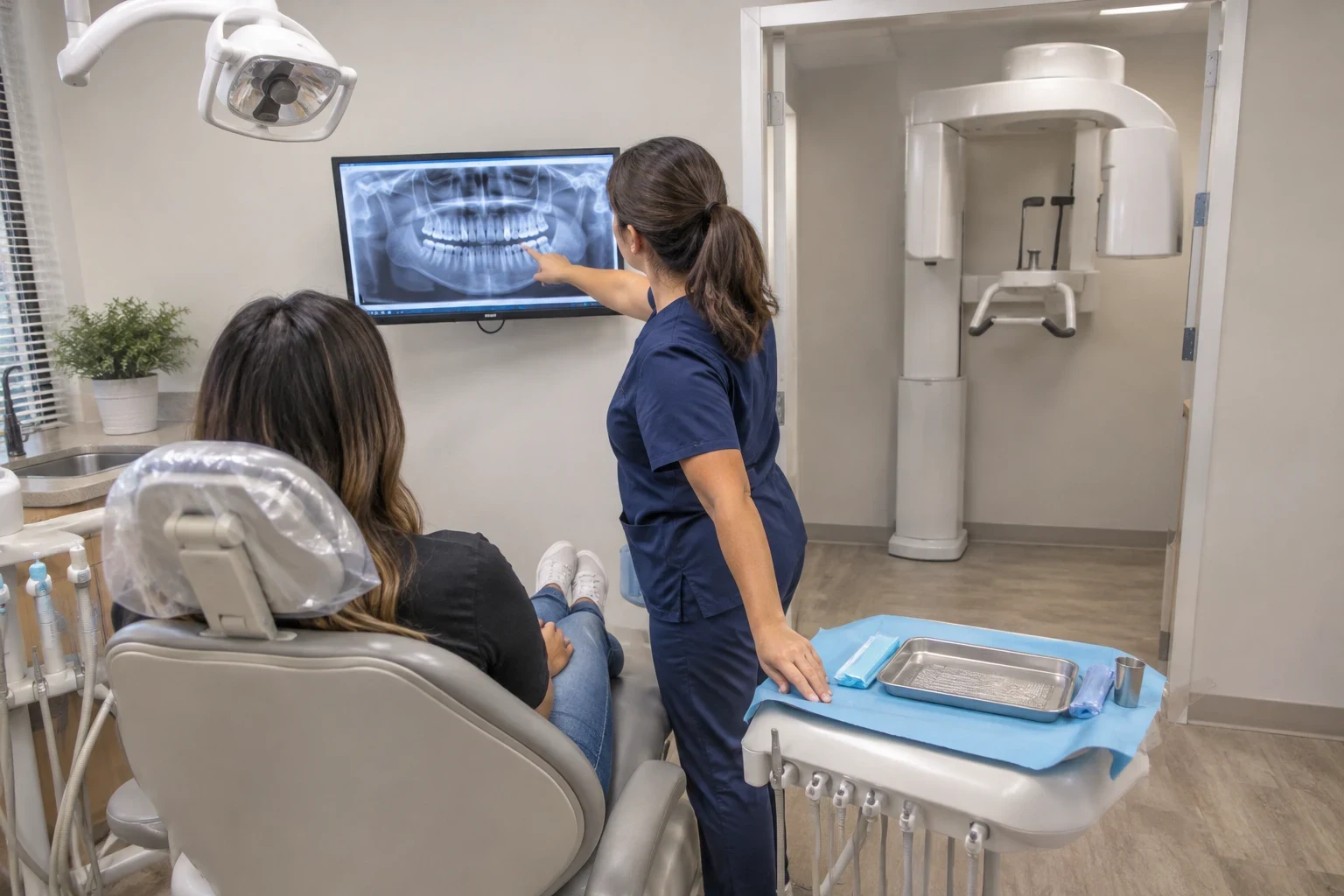
We remove wisdom teeth that are impacted, decaying or crowding the molars in front of them. Before treatment you get digital X-rays, a CBCT scan if the roots sit near a nerve, and a written quote listing each tooth and what it needs.
When Third Molars Should Come Out
Third molars, the teeth people call wisdom teeth, tend to show up somewhere from about age 17 into the early 20s. By then the jaw often has no space left at the back. A tooth that runs out of room stops partway, still covered by gum or bone, leaning into the second molar or lying flat. That angle makes a pocket where food and bacteria collect and a toothbrush cannot follow.
Removal is not automatic. If a third molar has come in fully, stands upright, can be cleaned and is healthy, we tell you so and leave it in place. It should come out when it is causing infection, decay, deep gum pockets or damage to the neighboring molar, or when imaging shows it is heading that way.
Before we start, every patient sees the scope spelled out: which teeth, how each one is positioned, whether any need to be sectioned, and what the visit will cost. No add-ons appear on the day.
What Your Wisdom Teeth Removal Includes
- 01
Digital X-rays and CBCT when needed
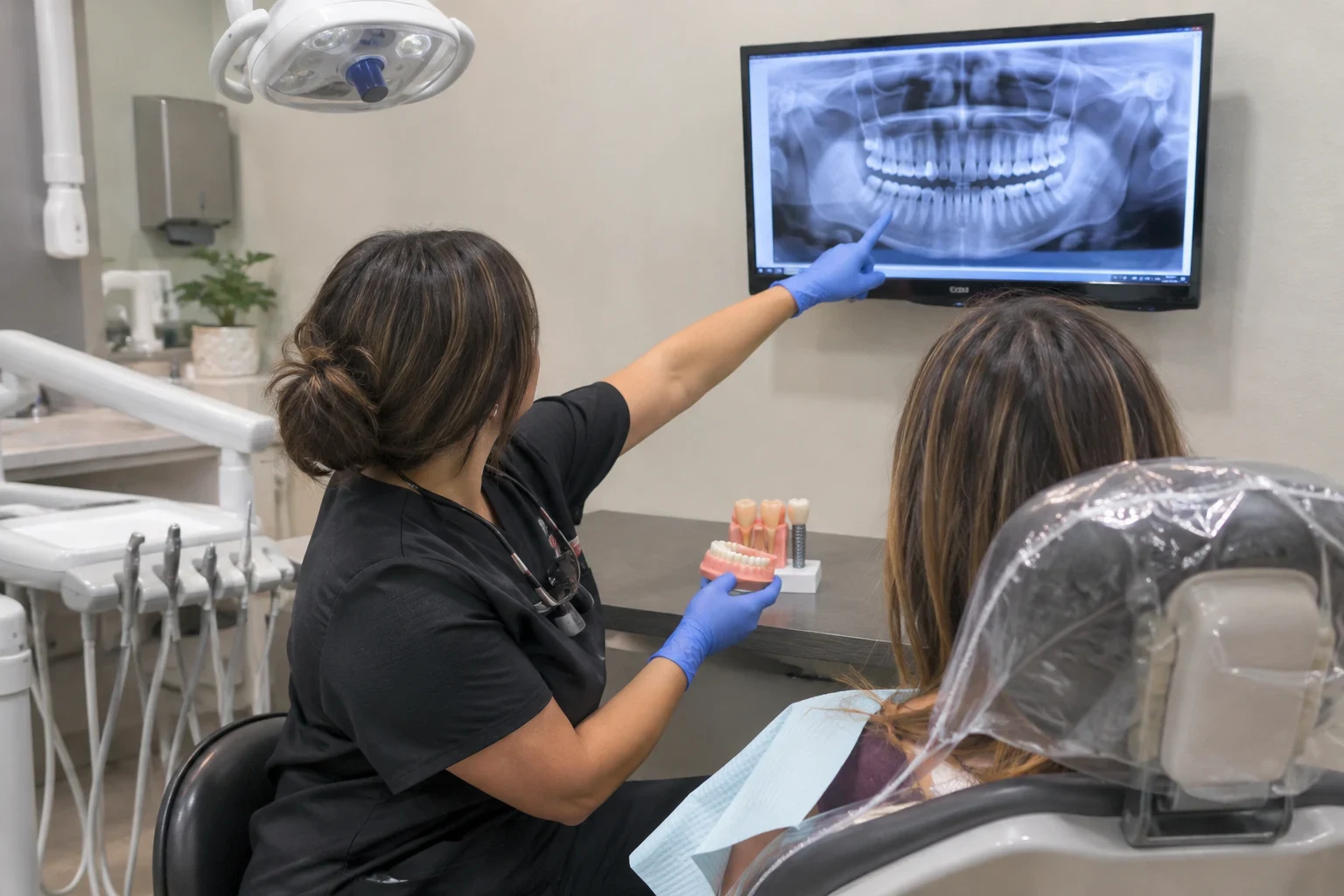
A panoramic X-ray shows the position of all four third molars. If a lower root looks close to the inferior alveolar nerve, a CBCT scan gives a 3D view so we can plan around it.
- 02
A treatment plan tooth by tooth
Each tooth is listed with its classification, such as soft tissue impaction, partial bony or full bony. The quote follows that, so you can see why one tooth costs more than another.
- 03
Local anesthetic and gentle care
We numb the area thoroughly and test it before beginning. You feel pressure as the tooth is loosened, not sharp pain.
- 04
Sectioning and bone preservation
Impacted teeth are often divided into smaller pieces so they come out with less force and less bone removed. That protects the second molar and shortens healing.
- 05
Sutures and aftercare instructions
We place stitches where the gum was opened and give you gauze plus printed instructions for the first week, including how to protect the blood clot.
- 06
Follow-up check
We look at the sockets after the first stage of healing to confirm the tissue is closing as it should.
Questions about Wisdom Teeth Removal?
Call(972) 663-5467Clues a Wisdom Tooth Needs Attention
Tender, puffy gum at the back of the mouth
When a third molar only partly breaks through, a flap of gum can sit over it and hold debris underneath. That flap gets infected, a condition called pericoronitis, and it usually flares again until the tooth is out.
Pain when you chew or open wide
Pressure from an impacted tooth, or inflammation around it, can make the jaw ache and limit how far your mouth opens.
Bad taste or odor that brushing does not fix
Food packed under a gum flap or into a pocket beside the third molar breaks down and leaves a persistent sour taste.
Decay in the second molar
A wisdom tooth tilted forward creates a gap against the back of the second molar. Cavities form there, and they can be hard to restore if left too long.
Crowding or a cyst on an X-ray
Sometimes there are no symptoms at all, and the problem shows up on imaging as bone loss or a fluid-filled sac around the crown of the tooth.
How the Visit Works
- 1
Evaluation and imaging
Your first visit is the $25 Focused Evaluation. It covers a comprehensive exam with digital X-rays, a CBCT scan if your roots call for one, and treatment planning and consultation. We show the images on screen and point out what each one tells us.
- 2
Written quote before treatment
The plan comes to you on paper, listing each tooth and its fee. We walk through your PPO insurance estimate or financing choices so the total is clear before you pick a date.
- 3
Removal day
After the area is numb, we open the gum where needed, divide the tooth into sections if its angle requires it, and lift it out. Erupted and soft tissue cases need less chair time than full bony impactions.
- 4
Closing and recovery
We rinse the socket, place sutures and have you bite on gauze. Expect a few days of soft foods and rest, with no straws or smoking, and start gentle salt water rinses when we tell you to.
What Moves the Cost of Wisdom Teeth Removal
How the teeth sit in the jaw drives most of the price, so we take images first and quote second. Every factor that applies to your case is named on the written quote. If something unexpected comes up once treatment begins, we pause and talk with you before anything changes.
- Type of impaction
- A fully erupted tooth is a simple extraction. A tooth still under gum costs more, and one locked in bone, especially lying horizontally, takes the most time and care.
- Number of teeth
- Taking out two teeth on one side is a different visit from removing all four. Many patients have them done together so they only go through one recovery.
- Root shape and nerve proximity
- Curved or fused roots, or roots near the nerve, may call for a CBCT scan and more careful sectioning.
- Coverage and payment plans
- Many patients use a PPO plan, and our office is in-network with 15+ major PPO dental insurance plans. Patients without coverage can join our In-house Membership Plan for uninsured patients. To spread out the cost, 0% interest financing is available for up to 24 months, and checking for preapproval has no credit score impact.
Wisdom Teeth Questions
Should wisdom teeth come out if they cause no pain?
Pain is not the deciding factor. Third molars that are upright, fully through the gum and easy to brush can often stay, and we keep an eye on them with X-rays at regular checkups. When imaging shows bone loss, a cyst or a cavity forming on the second molar, taking the tooth out is usually the safer choice, even if it feels fine today.
Will I be awake during the procedure?
Yes. We numb the teeth and the surrounding tissue with local anesthetic. You will notice pressure and some sounds, but sharp pain should not be part of it, and we confirm the area is numb before we begin and keep checking as we go.
How long is recovery?
Most patients return to normal routines within several days. Swelling tends to peak around day two or three and then eases off. Bony impactions take longer to settle than simple cases. The biggest thing to protect is the blood clot in the socket, because losing it can cause a painful dry socket.
Who performs the removal?
A board-certified dentist at our office plans and performs your treatment. If one of your teeth sits in a position we think a specialist should handle, we say so during the evaluation, not after you are already in the chair.
Can a damaged second molar be fixed after wisdom tooth removal?
In many cases it can be filled or crowned once the wisdom tooth is out of the way. If the decay has reached too deep to save the tooth, we can go over options such as dental implants and price them in a separate plan.
See What Your X-rays Show
Start with a $25 Focused Evaluation. You leave with images, a clear explanation of each wisdom tooth and a written quote, so you can decide on your own schedule.