ServicesDental Implants
Dental Implants in Hebron
An implant restores a missing tooth from root to crown, so you can bite down with normal force and the jawbone stops thinning. We map each implant on a CBCT scan, then hand you the scope and cost in writing before treatment begins.
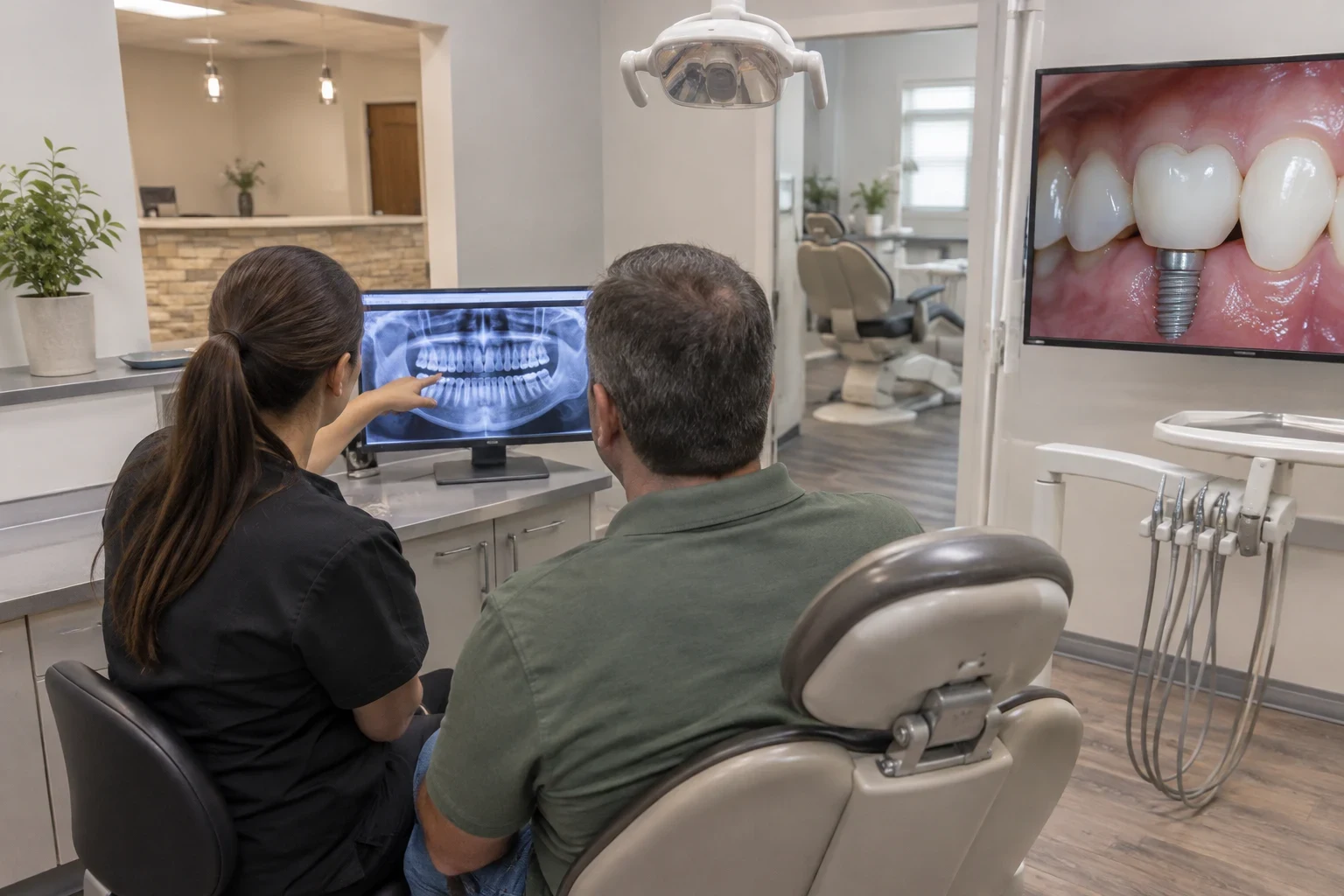
What an implant is and when it fits
Every implant is built from three pieces. The titanium post goes into the jawbone, taking the place of the lost root. An abutment attaches to that post and rises to the gumline. A crown, usually zirconia or porcelain, sits on top and is shaped and shaded to match your neighboring teeth. Over a few months the bone grows tight against the titanium surface. That fusion, called osseointegration, is what lets an implant handle full biting force.
Implants are usually the right call when one or a few teeth are missing and the teeth on either side are healthy. A bridge would mean grinding down those healthy teeth to anchor it. When most or all teeth are gone, two to four implants can hold a denture firmly in place. Our Dentures page covers that option in more detail.
Implant placement is done by our board-certified dentist. Before anything is scheduled, you get an itemized treatment plan listing each stage, what it involves and what it costs, so there are no added charges partway through.
What your implant treatment includes
CBCT 3D scan
A cone beam scan shows bone height, width and density, along with where the nerve and sinus sit. That tells us the right implant length and angle before surgery, not during it.
Written treatment plan
You get each phase listed out: any extraction, any graft, the post, the abutment and the crown. If your PPO plan or our financing applies, we show where it fits on the same page.
Post placement
The titanium post is placed under local anesthetic through a small opening in the gum. Most single implants take about an hour in the chair.
Bone grafting when needed
After a tooth has been gone a while, the bone in that spot thins. A graft rebuilds enough volume to hold the post securely. We only add it when the scan shows it is needed, and it appears on your plan from the start.
Abutment and custom crown
Once the bone has fused to the post, we attach the abutment and take a digital or physical impression. Your crown is made to fit your bite so it does not hit early or take more force than the teeth beside it.
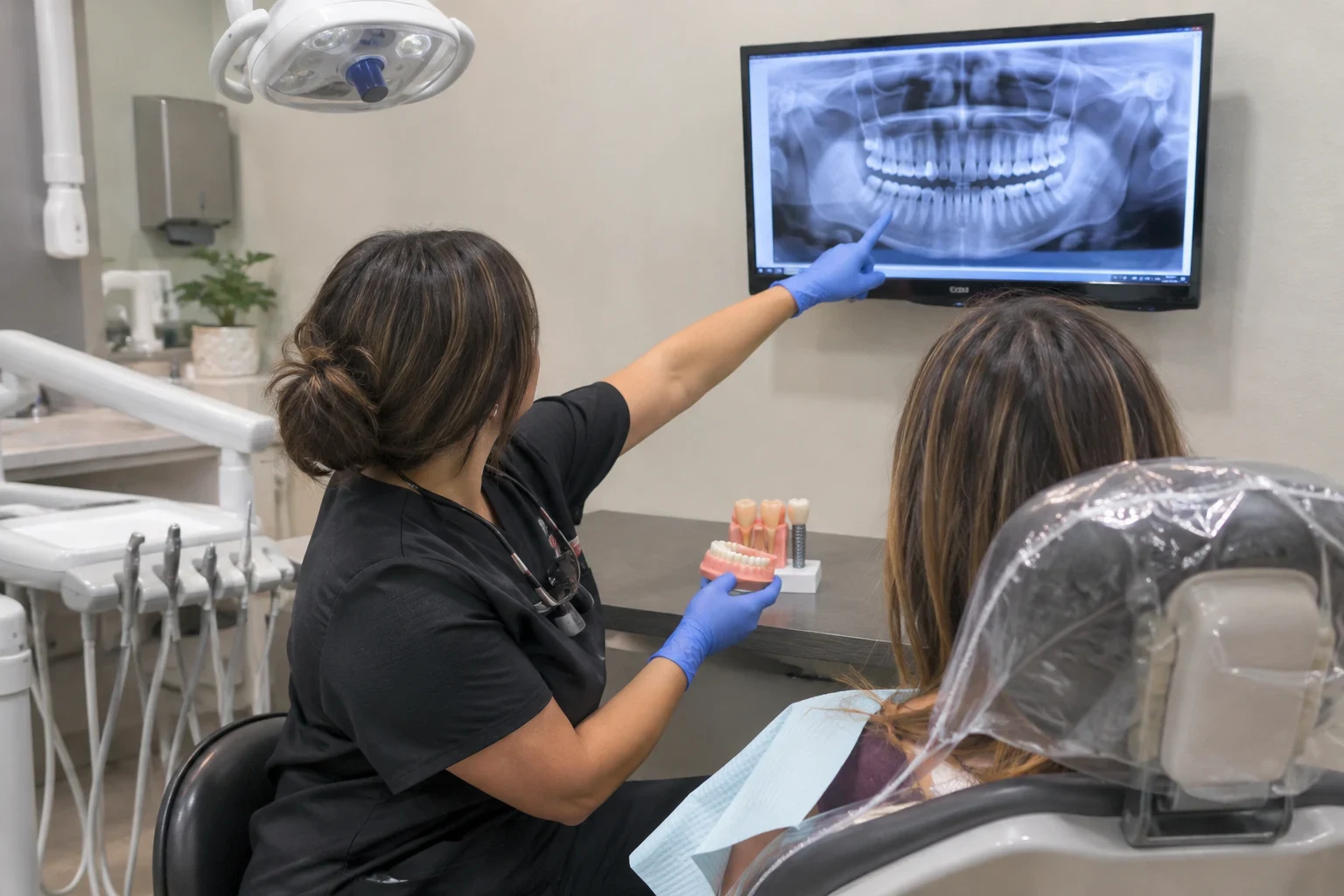
Signs an implant may be your next step
- A gap from a lost or pulled tooth
- Neighboring teeth drift and tip toward an open space, and the opposing tooth can grow down into it. Filling the gap early keeps your bite stable.
- A cracked tooth that cannot be saved
- When a crack runs below the gumline or into the root, a filling or crown will not hold. We remove the tooth and plan the implant, sometimes placing the post the same visit.
- A loose or sore partial denture
- Clasps wear down the teeth they hook onto, and plastic bases rub sore spots into the gums. Implants take that load off your remaining teeth.
- A bridge that has failed
- Decay under a bridge anchor often means losing the anchor tooth too. An implant can replace the missing teeth without relying on another tooth again.
- Avoiding certain foods
- If you chew only on one side or skip steak, apples or nuts, a missing back tooth is often the reason. Restoring it spreads the chewing load evenly again.
How implant treatment runs, start to finish
- 1
Focused evaluation
Treatment begins with our $25 focused evaluation. It covers a comprehensive exam and digital X-rays, adds a CBCT scan if your case calls for one, and ends with a consultation where we work out your treatment plan. You walk out knowing what your jaw and remaining teeth need.
- 2
Plan and cost review
We read through the written plan with you one line at a time, covering estimated insurance coverage and financing choices. No appointment for surgery is booked until you have reviewed it and said yes.
- 3
Placing the post
With the area numbed by local anesthetic, we set the titanium post and stitch the gum closed. Plan on mild soreness for a few days, similar to an extraction, and soft foods for the first week.
- 4
Healing period
Bone takes about three to six months to fuse onto the post, depending on its density and whether a graft went in. In many cases a temporary tooth can cover the gap while you heal.
- 5
Final crown
We connect the abutment, seat the crown and test your bite in every direction before you head out.
What moves the cost of an implant
Implant cases vary in cost mostly because of what happens below the gum, not the crown you see. Each factor below gets its own line on your written plan, so you can trace every part of the total before you agree to anything.
- Number of implants
- One missing tooth calls for one post, one abutment and one crown. A full arch held by an implant-supported denture uses several posts, yet it often costs less than placing an implant for every lost tooth.
- Bone volume
- Bone that is thin or short may need a graft before a post can hold. Upper back teeth sometimes need a sinus lift to create room. The CBCT scan reveals this ahead of time, so it is planned and priced up front.
- Extraction first
- When the failing tooth is still in the socket, taking it out is an added step. Our Extractions page walks through that visit.
- Crown material
- Zirconia, porcelain fused to metal and layered porcelain each differ in strength, how much light passes through them and what the dental lab charges.
- Insurance and payment
- We are in-network with 15+ major PPO dental insurance plans, and many of those plans pay toward part of the implant or the crown. Our financing carries 0% interest for up to 24 months, and you can see whether you qualify for preapproval with no impact on your credit score. Patients without insurance can enroll in our In-house Membership Plan instead.
Dental implant questions
- Does getting an implant hurt?
- We numb the area fully with local anesthetic before the post goes in. You will notice pressure and vibration, but the sharp sensation is blocked. Afterward most patients describe soreness similar to a tooth extraction for two to four days, and over-the-counter pain relievers and cold packs usually handle it.
- How long does the whole process take?
- From placement to final crown, most cases take three to six months because the bone needs that time to fuse with the titanium. A bone graft can add a few months. Your treatment plan includes an expected timeline for each stage.
- Am I a candidate if I have been told I lack bone?
- Often, yes. Grafting can rebuild bone width and height, and a sinus lift can add room in the upper jaw. The CBCT scan at your evaluation shows whether either is needed and how much.
- How long do implants last?
- The titanium post can last decades with good care, because titanium does not decay. The crown wears over time like any restoration and may need replacing eventually. Brushing, flossing around the abutment and regular cleanings protect the gum and bone that hold the post.
- Will my PPO insurance pay for an implant?
- It depends on the plan. Some cover the post, some cover only the crown, and many have annual maximums. We check your benefits and show the estimated insurance portion on your plan before treatment.
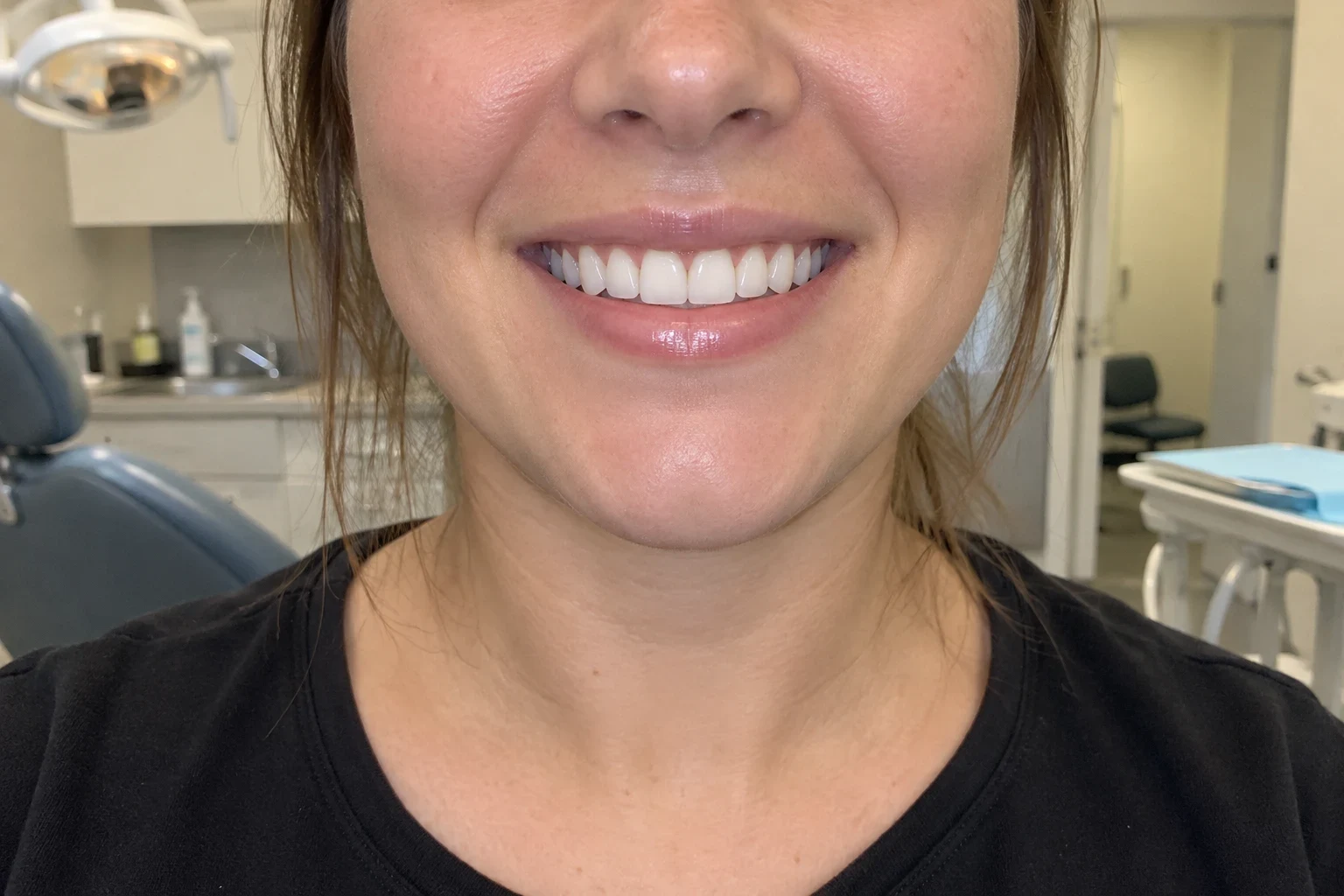
See your full implant plan before you decide
Start with a focused evaluation and a CBCT scan if needed. You will leave knowing the scope, the timeline and the cost in writing. Patients come to us from Lewisville, Carrollton, The Colony and nearby towns.