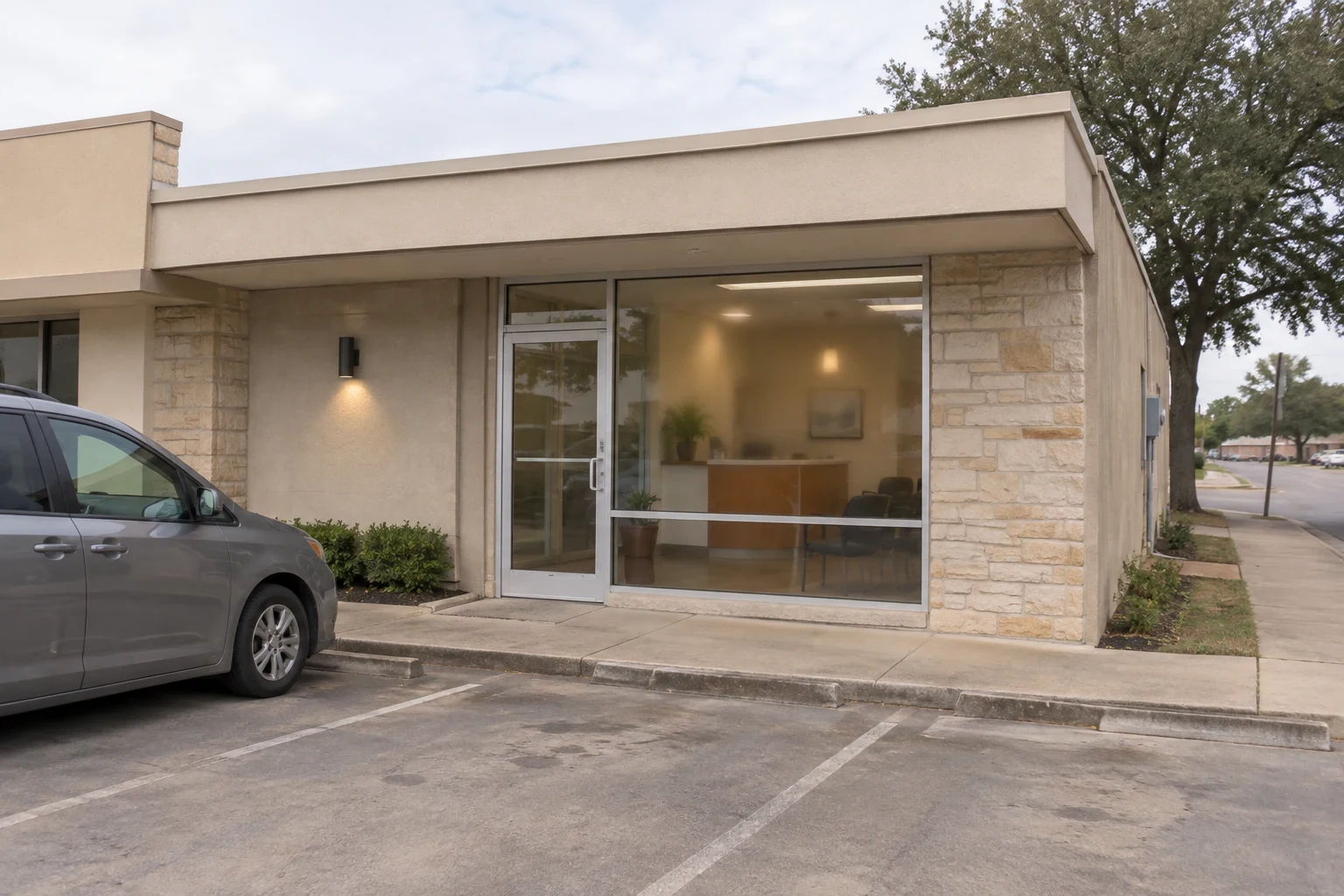
Hebron, TX
Dental Implants in Hebron, Itemized Before We Start
We replace missing and failing teeth with dental implants, implant-supported dentures and the extractions that often come first. Before treatment begins, you get a written plan listing each phase and what drives its cost. Patients see us from Hebron, Carrollton, Lewisville and Plano, using PPO insurance, financing or our membership plan.
- Itemized plan before treatment
- In-network, 15+ major PPOs
- Up to 24 months at 0%
- Uninsured? Ask about membership
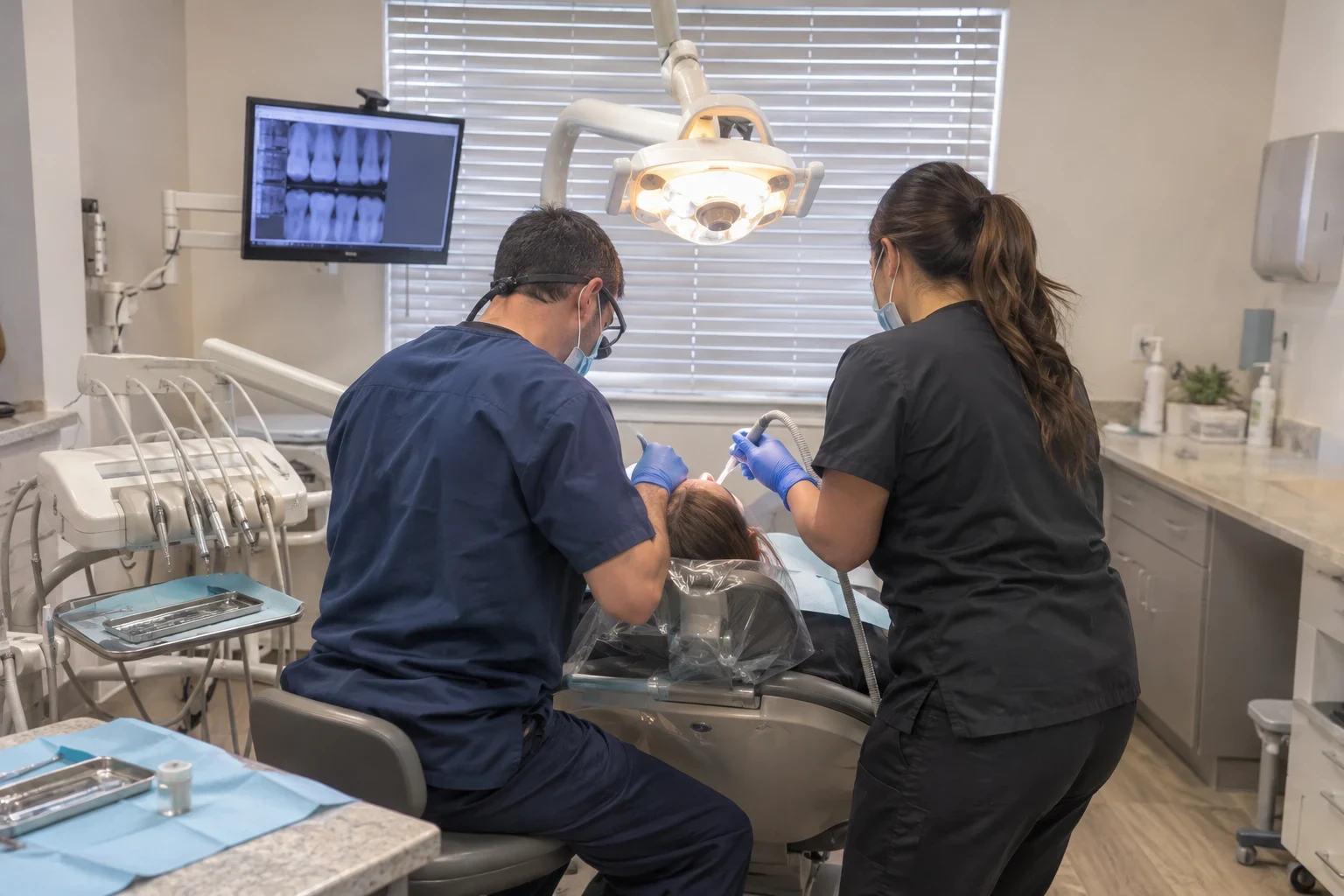
Implants, Dentures and the Care Around Them
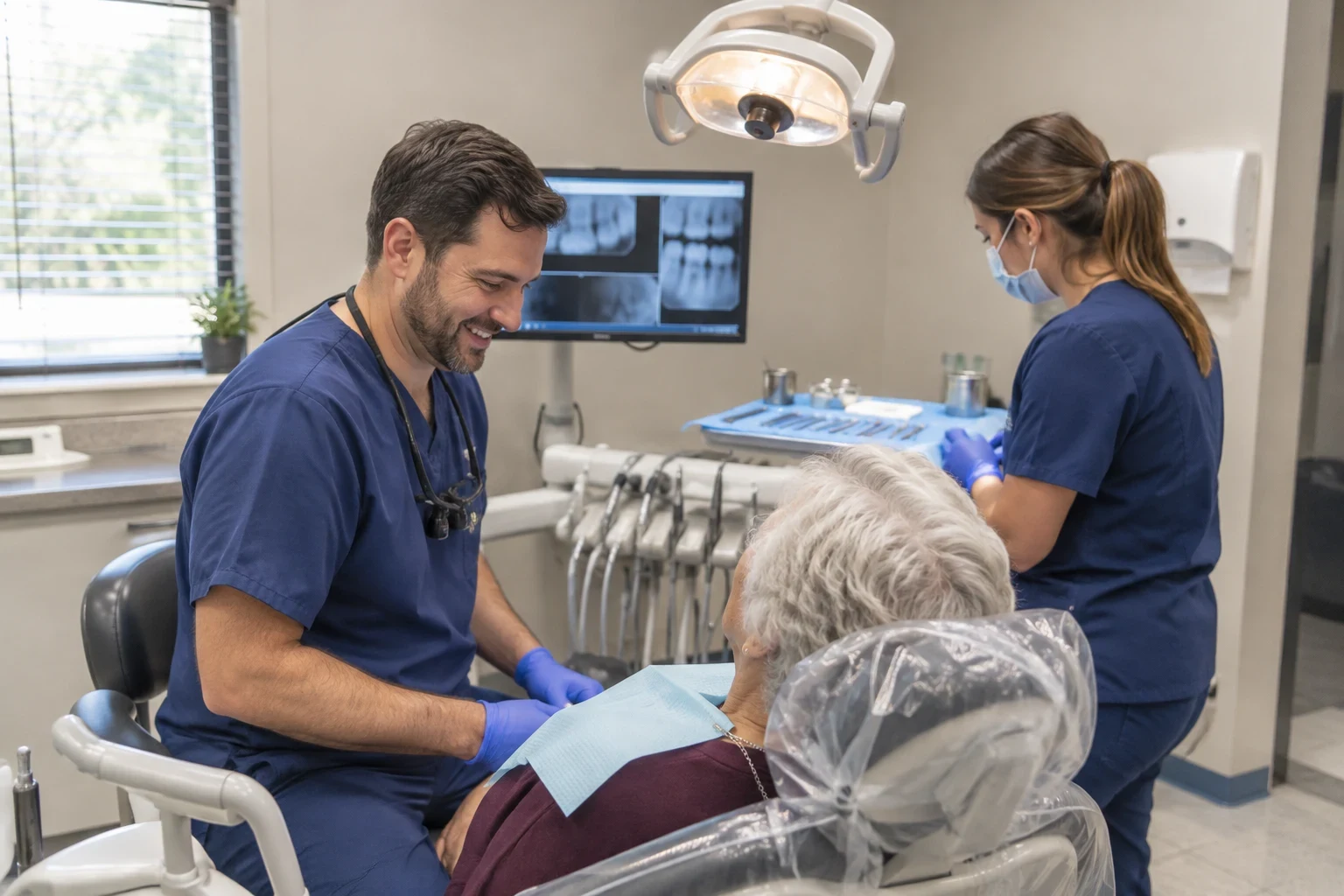
Our board-certified dentist plans each implant case from a CBCT scan, a 3D X-ray that shows bone height and width along with the position of nerves and sinuses. An implant is three parts: a titanium post set into the jawbone, an abutment that connects to it, and the crown, bridge or denture you actually chew with. We also provide dentures, root canals, extractions, wisdom teeth removal and prompt visits for a cracked or aching tooth. That means a patient who needs a failing tooth out before an implant can do both with the same office and the same treatment plan.
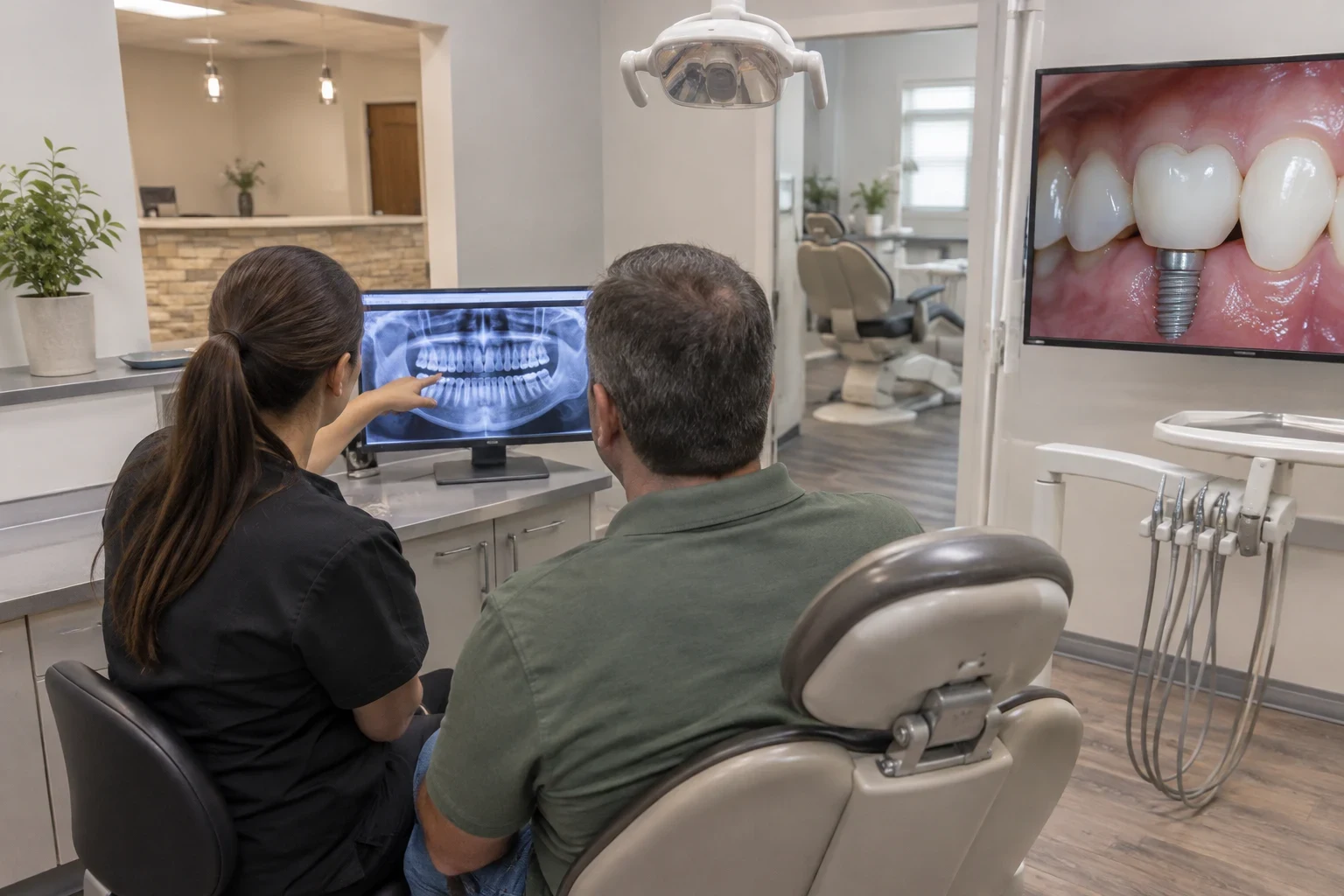
Dental Implants
Titanium implants, abutments and crowns planned from a 3D scan, with every stage and its cost laid out on paper before treatment begins.
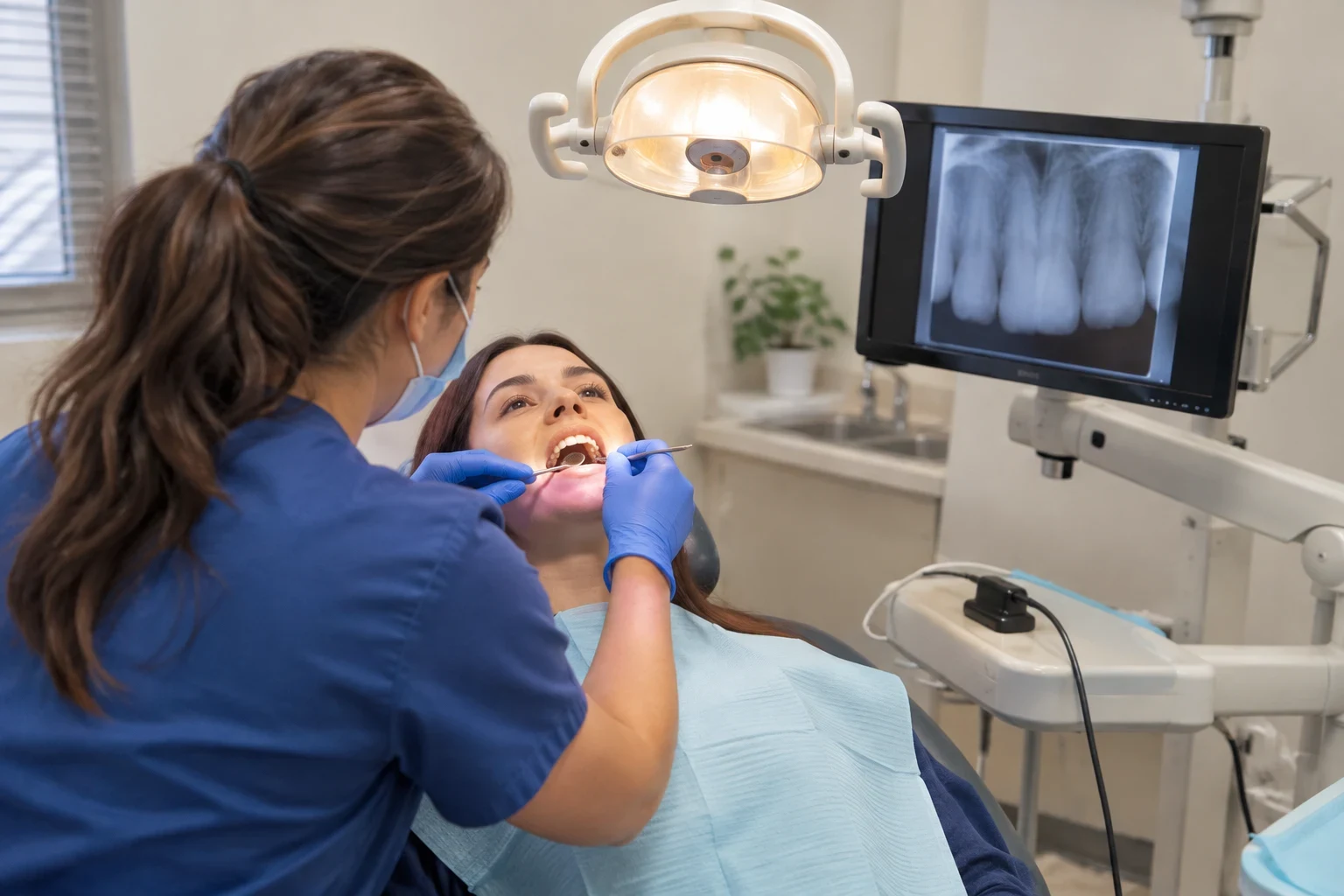
Emergency Dentistry
Prompt visits for toothaches, cracked teeth, swelling and lost crowns, with the cause found on X-ray and a written plan before treatment.
Dentures
Full, partial and implant-retained dentures built from careful impressions and bite records, with every step and cost written down first.
Root Canals
We remove infected or inflamed pulp, clean and seal the canals, then rebuild the tooth so you keep chewing on your own root.
Extractions
Removal of broken, infected or crowded teeth, planned from X-rays and a CBCT scan when needed, with the scope and cost written down before we begin.
Wisdom Teeth Removal
Impacted or crowded third molars removed under local anesthetic, with imaging first and the scope and price explained before any tooth comes out.
How Implant Treatment Runs
Most single-tooth cases take three to six months from first visit to final crown, mostly because bone needs time to bond to the post.
- 1
Book by phone
Your first visit is a $25 Focused Evaluation. It includes a comprehensive exam and digital X-rays, a CBCT scan if your bone or nerve position needs a 3D view, and time for treatment planning and consultation. On the call we pick a time together and let you know what to bring, such as your insurance card.
- 2
Exam and 3D imaging
We check the gums, bite and neighboring teeth, then review the scans with you on screen. You see the same bone measurements we use to plan.
- 3
Itemized plan and costs
You leave with a written treatment plan listing each phase, its fee and expected insurance coverage. Read it over, compare it, ask questions. Nothing is scheduled until you decide.
- 4
Placement and healing
The titanium post is placed under local anesthetic, usually in about an hour for one tooth. Over the next few months the bone grows against the post's surface, a process called osseointegration, while you wear a temporary if the gap shows.
- 5
Final crown and checkups
Once the post is stable, we attach the abutment, take impressions and seat your crown, bridge or denture. Follow-up visits check the bite and the gum around the implant.
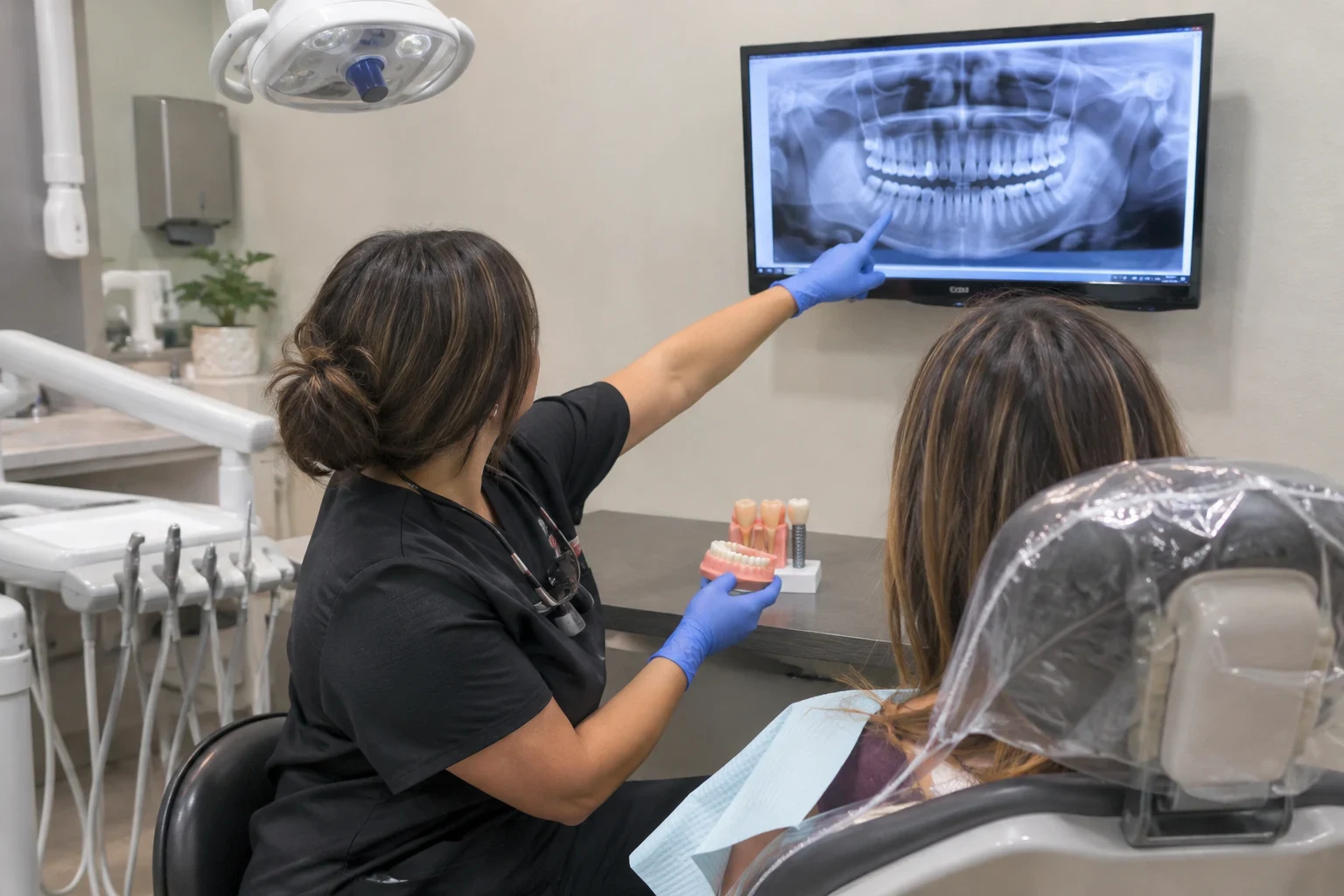
How We Work With Implant Patients
Tooth replacement usually happens in stages over several months. Our job is to make every stage clear to you before it starts, including what it costs.
- Every fee on its own line
- The implant post, abutment, crown, any bone graft and any extraction each appear as a separate line with its own fee. Expected insurance payment sits right beside your share. If the plan needs to change partway through, we explain why and update the document before going further.
- Planned from 3D imaging
- Your implant is placed by a board-certified dentist working from CBCT images rather than flat X-rays alone. The scan lets us measure bone in three dimensions and choose post length and angle before the appointment, which keeps placement predictable.
- An honest save-or-replace answer
- Not every damaged tooth needs to come out. A root canal and crown can keep a tooth with a healthy root and enough structure left. We show you the images, explain what we see in the root and surrounding bone, and tell you which option we would choose and why.
- Several ways to pay for care
- We are an in-network provider for 15+ major PPO dental insurance plans. Patients with no coverage can join our in-house membership plan, which was built for that situation. Larger cases can be paid off over as long as 24 months with 0% interest financing, and the preapproval check has no impact on your credit score.
- Gentle care at each step
- Implant placement is done under local anesthetic, and we tell you what you will feel before we do it. Most patients describe pressure, not pain, and go back to normal routines within a day or two.
What Moves the Cost of Dental Implants
Two patients missing one tooth can see very different totals. The difference almost always comes from what is under the gum and how many teeth the restoration has to replace. Each factor below shows up as its own line on your treatment plan.
Your written quote lists every phase separately, with expected insurance coverage shown beside your portion. Nothing is added to the bill without being explained and added to an updated plan first.
- How many teeth and which restoration
- A single crown on one implant is the simplest case. A bridge can span three teeth on two implants, and a full-arch denture can snap onto as few as four. Fewer posts carrying more teeth often lowers the cost per tooth.
- Bone volume at the site
- Jawbone shrinks once a tooth is gone, sometimes quickly in the first year. If the CBCT scan shows the ridge is too thin or short to hold a post, a bone graft or, in the upper back jaw, a sinus lift may be needed first.
- Extractions before placement
- A failing tooth has to come out before the implant goes in. Whether the post can be placed at the extraction visit or the site needs months to heal depends on infection and bone, and that changes the number of appointments.
- Crown and denture materials
- Zirconia crowns are very strong and resist chipping. Porcelain fused to metal is a long-proven option with a different cost. Denture teeth and bases also vary, and we explain the tradeoffs in plain terms.
- Insurance benefits and timing
- PPO plans often cover part of an implant or the crown on it, subject to annual maximums. Spreading phases across two benefit years can sometimes stretch coverage, and we will point out when that is an option.
Why Costs Come Before Treatment
Many people who come to us have put off replacing a tooth for years. Often the reason is a quote that grew once treatment started, or a plan nobody explained. So we built our practice around the opposite habit: you see the scope and each cost driver on paper before anything begins.
Our focus is tooth replacement and the work that leads up to it: extractions, wisdom teeth removal, root canals when a tooth can be saved, and dentures for patients who need a full arch. We use CBCT imaging so decisions rest on measurements, and we take the time to explain why a step is or is not needed.
- Certifications
- Board-certified
Patients From Hebron and Nearby
Our office serves patients in Hebron and across the surrounding area, including Carrollton, Lewisville, Plano, Frisco, The Colony and Coppell. We also see patients from Farmers Branch, Addison, Lake Dallas and Hickory Creek. Implant treatment spans several visits, so most patients choose an office within a short drive.
- Hebron
- Lewisville
- Carrollton
- The Colony
- Plano
- Frisco
- Coppell
- Farmers Branch
- Addison
- Lake Dallas
- Hickory Creek
Treatment happens at our office. Some questions about your plan or its costs can be handled by phone or video, which saves a trip between visits.
Questions Patients Ask Before Starting
- How much do dental implants cost?
- It depends on how many teeth you are replacing, whether you need a bone graft or extraction first, and the crown or denture material. We do not give a number before seeing your scans, because bone volume alone can change the plan. After your evaluation you get a written, itemized quote for every phase.
- Will my insurance cover implants?
- Many PPO plans cover part of the implant, the crown, or both, up to the plan's annual maximum. We are in-network with 15+ major PPO dental insurance plans and can check your benefits before treatment. Your treatment plan shows expected coverage and your share side by side.
- What if I don't have dental insurance?
- Our in-house Membership Plan was created for patients without dental coverage. To pay over time, you can use our financing at 0% interest for up to 24 months, and checking for preapproval has no impact on your credit score. We can go over both options when you call.
- Do I need a bone graft before an implant?
- Not always. If a tooth has been missing for a while, the ridge may have thinned enough that a post would not be fully surrounded by bone. The CBCT scan measures that directly, so we can tell you at the evaluation if grafting is needed and show you why on the images.
- Is implant placement painful?
- The area is fully numbed with local anesthetic, so most patients feel pressure and vibration rather than pain. Some soreness and mild swelling are normal for a few days afterward. You leave with written aftercare instructions, and we check on healing at follow-up visits.
- What is included in the $25 Focused Evaluation?
- The visit starts with a comprehensive exam and digital X-rays. If your case needs a 3D look at bone and nerve position, a CBCT scan is part of it. We close with treatment planning and a consultation about your options. It suits anyone weighing implants or dealing with one problem tooth, while the $89 New Patient Special covers a full exam and cleaning for routine care.
- Can a damaged tooth be saved instead of replaced?
- Often, yes. If the root is sound and enough tooth structure remains, a root canal and crown can keep your natural tooth. If a crack runs below the gum or the root is badly infected, an extraction and implant usually lasts longer, and we show you the images that support either answer.
- Do crowns and bridges come with a warranty?
- Yes. Crowns and bridges carry a 5-year warranty. We note it on your written treatment plan so you know what it covers before the restoration is placed.
Know the Full Cost Before Treatment Begins
Start with a focused evaluation, scans included if you need them. You will leave knowing what treatment involves, what each phase costs and how your insurance or financing fits.