ServicesDentures
Dentures in Hebron, TX
We make full and partial dentures that fit your bite and stay put, including implant-retained options for lower dentures that float. Before anything is made, you get a written treatment plan listing each step, the materials and the cost, so nothing gets added later.
When a Denture Is the Right Answer
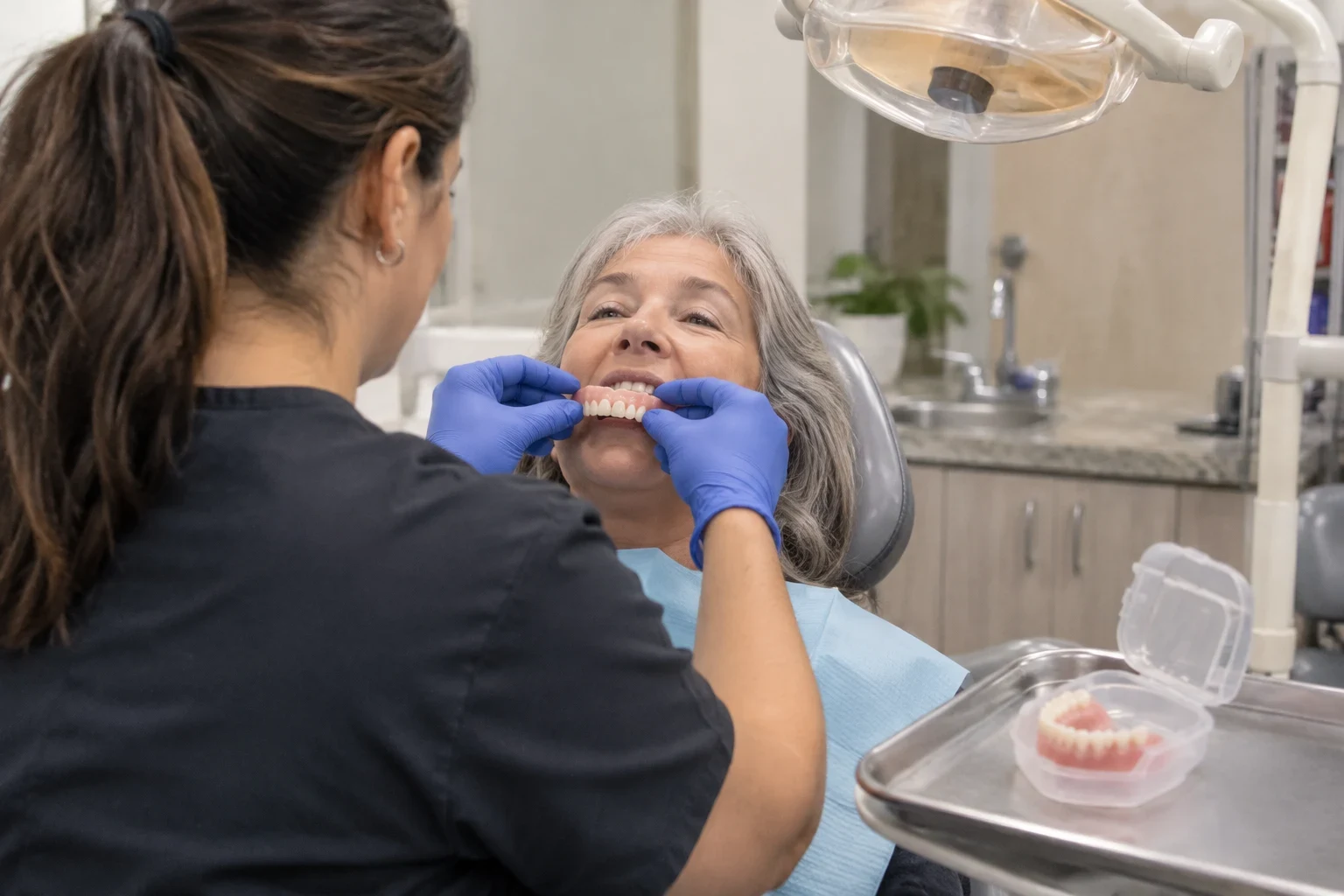
A denture replaces several missing teeth, or all of them, with a removable prosthesis: acrylic teeth set in a gum-colored acrylic base. A partial denture adds clasps or a thin cast metal framework that rests on your remaining teeth. It is often the right call when many teeth are lost, failing or too costly to save one by one.
Fit is the hard part. Once teeth are gone, the jawbone that held them slowly shrinks, so a denture that fit well five years ago can start to rock, rub or click. We take that into account when we plan, and we will tell you plainly if a reline, a new denture or a few dental implants under the denture makes more sense for your mouth.
Your plan is put together by our board-certified dentist and handed to you in writing before any impressions are poured.
What Our Denture Work Covers
- 01
Complete dentures
Full upper or lower dentures for patients with no remaining teeth on that arch. The upper relies on suction against the palate. The lower has far less surface to grip, which is why it tends to be the harder one to wear.
- 02
Partial dentures
Removable partials that fill gaps between your own teeth. We explain the tradeoff between an all-acrylic or flexible partial and a cast metal framework, which is thinner, stronger and usually more stable over time.
- 03
Immediate dentures
A denture made ahead of time and placed the day your teeth come out during extractions, so you are not without teeth while you heal. Expect it to need a reline once the gums settle.
- 04
Implant-retained overdentures
Two or more dental implants placed in the jaw, with attachments that snap into the underside of the denture. This is the most common fix for a lower denture that moves when you talk or eat.
- 05
Relines and adjustments
Reshaping the fitting surface of an existing denture to match how your gums have changed, plus trimming sore spots and correcting the bite.
Questions about Dentures?
Call(972) 663-5467Signs It Is Time to Look at Dentures or a Refit
Several failing teeth at once
Multiple teeth with deep decay, cracks or advanced gum disease can cost more to save individually than to replace together.
Your denture rocks or slips
Movement usually means the bone underneath has resorbed and the base no longer matches the ridge. Adhesive hides the gap but does not close it.
Sore spots that keep coming back
Repeated ulcers in the same place point to a pressure point on the base or an uneven bite that shifts the denture when you chew.
Worn or chipped teeth on the denture
Acrylic teeth wear flat over the years. That lowers your bite, can make the face look shorter and strains the jaw joints.
Gaps making chewing hard
Missing back teeth push more load onto the teeth you have left, and neighboring teeth start to drift and tip into the space.
How a Denture Is Made, Step by Step
- 1
Evaluation and written plan
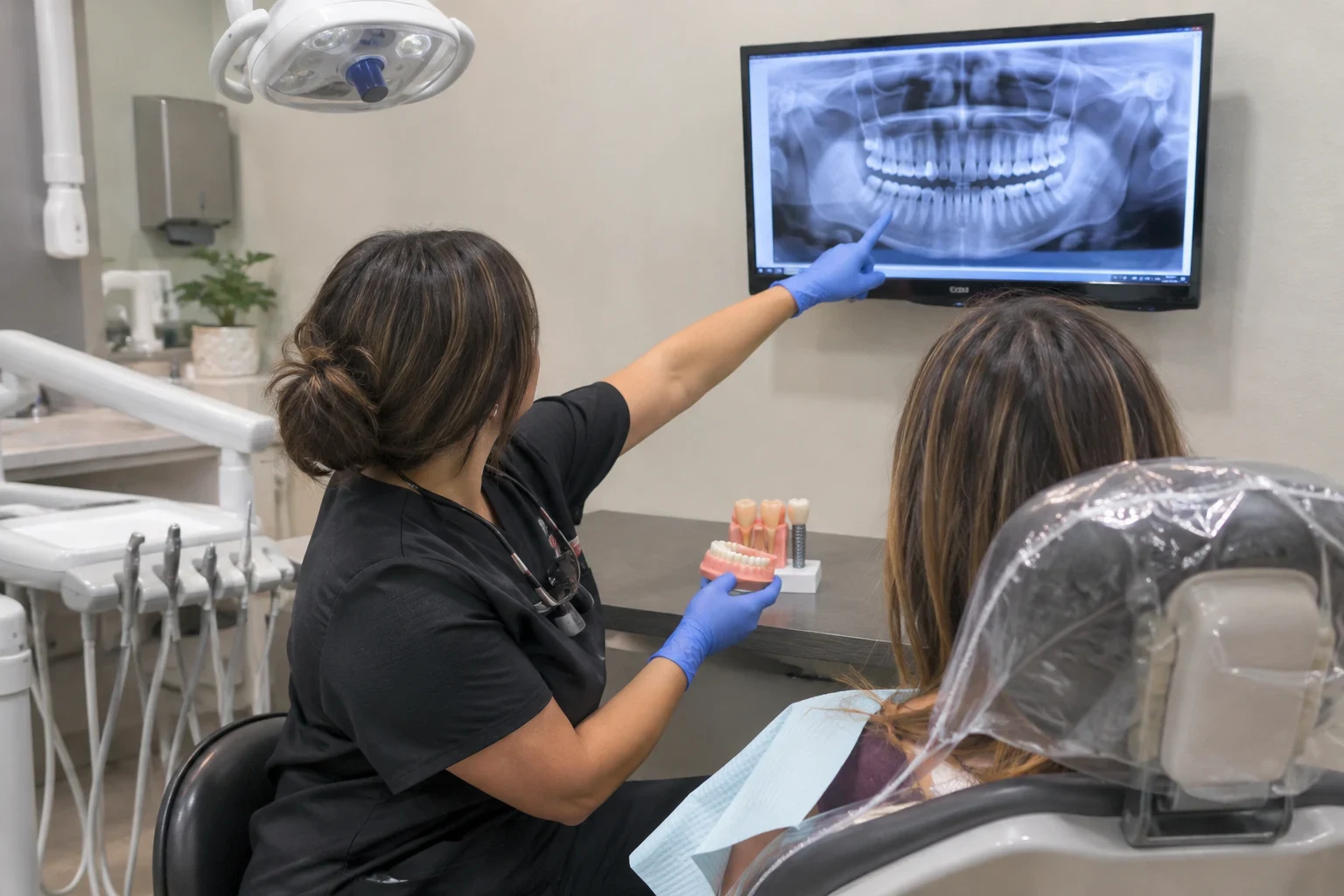
We examine your gums, remaining teeth and bone, take digital X-rays and talk through your options. You leave with a written treatment plan showing scope and cost for each stage.
- 2
Impressions and bite records
Detailed impressions capture the shape of your ridges and palate. A bite registration records how your jaws meet and how much vertical space the teeth should fill.
- 3
Wax try-in
Before the final denture is processed, you try on a wax setup of the teeth. You see the shape and shade, we check speech and bite, and changes are easy at this stage.
- 4
Delivery and follow-up visits
We place the finished denture, check for pressure points and adjust the bite. Most patients need a few short follow-up visits in the first weeks as the tissue adapts.
What Moves the Cost of Dentures
The price of a denture comes down to three things: how many teeth it replaces, the materials it is built from and any treatment your mouth needs before it can be fitted. Each of those appears as its own line in your written plan before we begin. Most major PPO dental plans work with us, since we are in-network with 15+ of them. Patients without coverage can join our in-house Membership Plan.
- Full, partial or overdenture
- A partial on one arch costs less than a complete upper and lower set. An implant-retained overdenture adds the implants plus the attachments that hold the denture in place.
- Materials
- A cast metal partial framework, a flexible base and higher-grade layered acrylic teeth each come with a different lab fee.
- Work needed first
- Extractions, smoothing of the bone ridge or treating a gum infection before impressions are listed as separate items on your plan.
- Immediate versus conventional
- An immediate denture needs a reline once the gums heal, and some patients later need a second denture, which changes the total.
- Spreading out payments
- Our financing lets you pay the balance at 0% interest over up to 24 months. Checking for preapproval has no effect on your credit score.
Answers About Getting and Wearing Dentures
How many visits does a new denture take?
A conventional denture usually takes several appointments over a few weeks. We capture the shape of your gums, record how your jaws close, let you try a wax setup of the teeth and then deliver the finished denture. When teeth have to be removed first, the gums normally need time to heal before final impressions. An immediate denture avoids that wait, but it will need a reline later.
Will my lower denture stay in place?
A lower denture moves more than an upper because there is no palate to create suction and the tongue presses against it. Accurate impressions and an even bite make a big difference. If it still lifts when you talk or chew, two dental implants with snap attachments are the most dependable fix.
Can my old denture be relined instead of replaced?
In many cases, yes. When the teeth are still in good condition and the base has no cracks, a reline brings back the fit for less than a new denture costs. If the teeth have worn flat or your bite has collapsed, we will show you why replacing it is the better use of your money.
How long do dentures last?
Acrylic teeth wear down and the jawbone keeps changing shape, so most dentures need a reline every few years and eventually a replacement. Cleaning yours every day and leaving it out overnight slows the wear and keeps your gums healthier.
Does insurance cover dentures?
Many PPO plans cover part of the cost, within your plan's annual limits and any waiting periods. We look up your benefits and put your estimated share in the written plan. Without insurance, our Membership Plan brings your costs down.
Find Out What Your Denture Will Involve
Start with our $25 Focused Evaluation. You get a comprehensive exam and digital X-rays, a CBCT scan if the dentist needs a 3D view of your bone, plus treatment planning and a consultation. You leave knowing your options and the written cost of each one.