ServicesRoot Canals
Root Canals in Hebron, TX
A root canal removes infected or inflamed pulp from inside a tooth. We then clean, shape and seal the canals so the tooth can stay. First we test the tooth and take imaging, and you get the scope and cost in writing before any treatment starts.
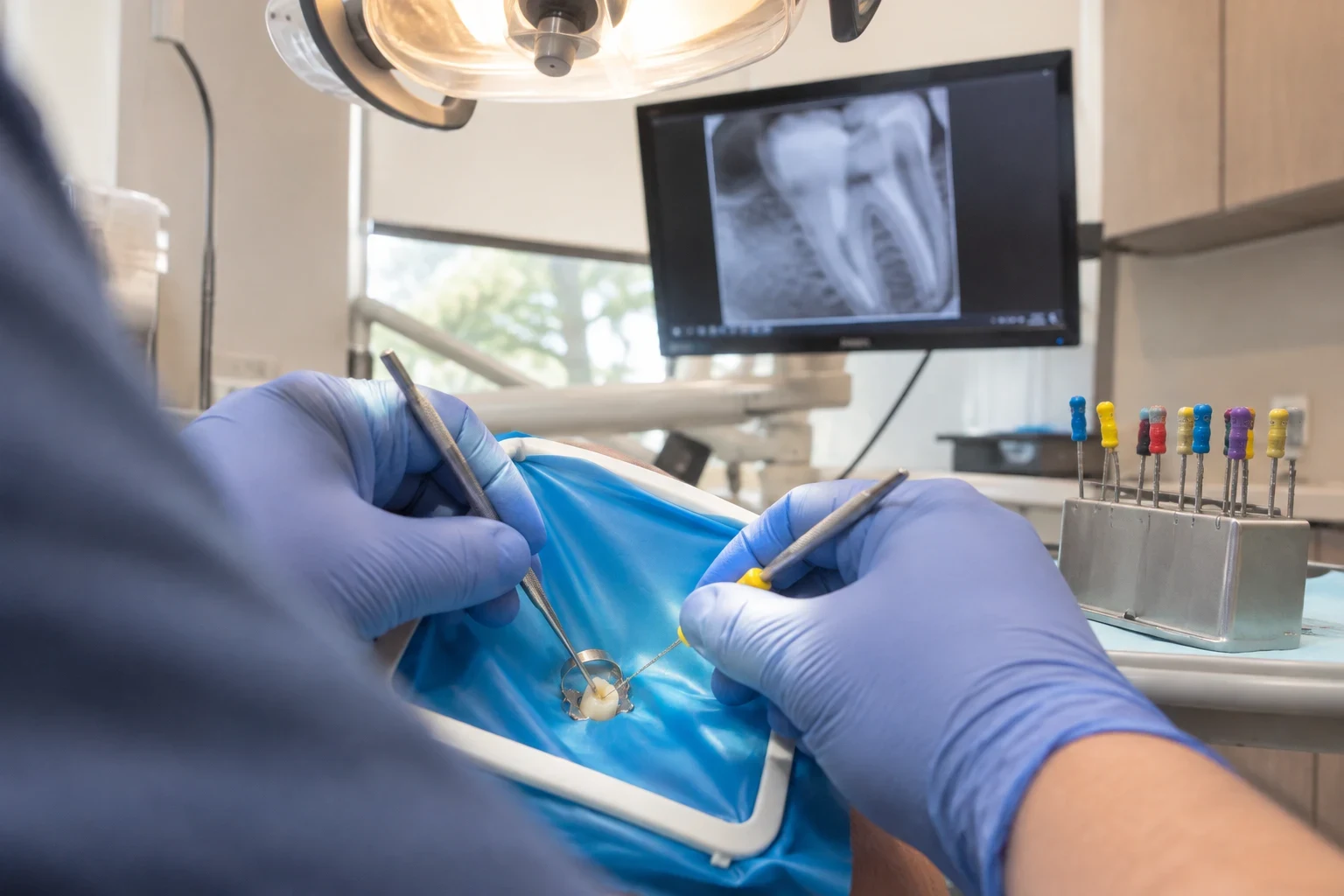
When a root canal is the right call
At the center of each tooth sits the pulp, a soft bundle of nerve fibers, small vessels and supporting tissue. It fills a chamber that narrows into canals running down to the tip of each root. Bacteria can get there through deep decay, a crack, or a tooth that has had several fillings over the years. Once the pulp is infected or too inflamed to recover, it cannot heal by itself, and the infection can move into the jawbone around the root.
A root canal fits when the visible part of the tooth can still be rebuilt and the root and bone around it are healthy. Holding on to your natural root keeps the bone in place and your bite steady. If the tooth has split below the gumline or has too little left to support a crown, we say so directly and explain extraction and dental implants as the alternative.
You see the full scope on paper before we start: the root canal, any core buildup, and a crown if the tooth calls for one. Nothing is added mid-appointment without a conversation with you first.
What your root canal treatment includes
Pulp testing and imaging
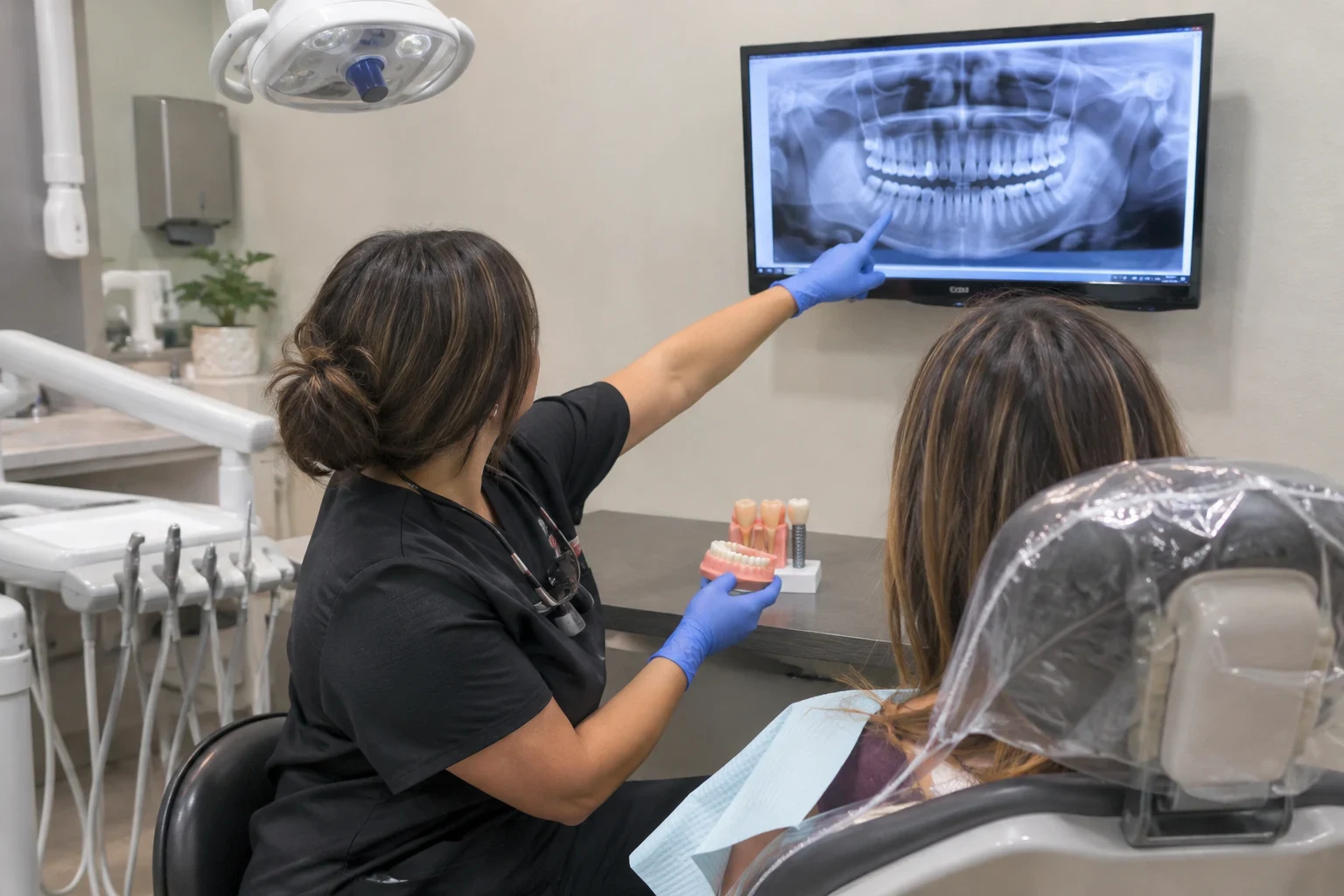
Cold and tapping tests help us separate inflammation that can settle down from pulp that is past recovery. Digital X-rays show the root tip. If the anatomy is hard to read, a CBCT scan maps extra canals, tight curves or bone loss in three dimensions.
Local anesthetic and isolation
Once the tooth is fully numb, we fit a rubber dam around it. This thin sheet keeps saliva and bacteria away from the opened tooth and keeps the disinfecting rinses from reaching your tongue and throat.
Shaping each canal
Slender nickel-titanium instruments clear the pulp tissue out and taper each canal all the way to the root tip. We confirm that length with electronic measurement and X-rays, then irrigate with disinfecting solutions that reach the side branches no instrument can.
Sealing with gutta-percha
The cleaned canals are packed with gutta-percha, a rubber-like material, plus a sealer. The two close off the space so bacteria have no way back in.
Buildup and crown planning
Once treated, a back tooth is drier and more brittle, and molars take the heaviest bite. Most need a core buildup and a crown to avoid cracking. Your written plan says whether yours does and lists that cost.
Signs a tooth may need a root canal
- Cold sensitivity that lingers
- A sharp twinge that fades in a few seconds is often minor. An ache that lasts a minute or more after the cold drink is gone points to inflamed pulp.
- Pain when you bite down
- Tenderness when you chew can mean the inflammation has reached the ligament around the root tip.
- A small bump on the gum
- A pimple-like bump that drains and keeps coming back is often a fistula. That is a path pus takes to escape from an infection at the root.
- A tooth turning gray
- A tooth that darkens after an old knock may have pulp that has died, even when it does not hurt.
- Throbbing that wakes you at night
- Pain that starts on its own, especially when you lie down, usually means the pulp cannot recover. Swelling in the face or jaw should be seen promptly.
How root canal treatment runs
- 1
Evaluation and written plan
It starts with our $25 Focused Evaluation. We examine the tooth and the rest of your mouth, take digital X-rays, and order a CBCT scan only if the root anatomy needs a three-dimensional view. Then we sit down for treatment planning and a consultation, and you leave with the diagnosis and the cost on paper.
- 2
Numbing and access
With the tooth numb and the rubber dam in place, we open a small window through the biting surface into the pulp chamber. Most patients notice pressure, not pain. Our board-certified dentist handles your treatment.
- 3
Cleaning, shaping and sealing
Plenty of teeth are completed in a single visit. A molar with several canals, or a tooth with an active infection, may take two, with medication left inside the tooth between appointments.
- 4
Restoring the tooth
The access opening is closed with a filling or core buildup. When a crown is in your plan, it follows so the tooth is protected under chewing load.
- 5
Recovery
Biting may feel sore for a few days, and over-the-counter pain relievers usually keep it in check. Chew on the other side and skip hard foods there until the final restoration is placed.
What moves the cost of a root canal
Two things drive the fee more than anything else: the tooth being treated and what it needs once the canals are sealed. We check your insurance benefits first, then put every line in a written estimate before treatment. We are in-network with 15+ major PPO dental insurance plans, and if you have no coverage, our In-house Membership Plan is worth asking about.
- Which tooth it is
- Most front teeth have a single canal. Molars usually have three or four, often narrow and curved, so each one adds instrument time and steps to the visit.
- Infection and canal anatomy
- An abscess at the root tip, canals narrowed by calcium deposits, or an extra canal spotted on the CBCT scan can mean a second visit or medication placed between appointments.
- Retreating an earlier root canal
- When a tooth has been treated before, the old filling material has to come out before the canals can be disinfected again. That is slower, more detailed work than a first root canal.
- The final restoration
- Your estimate lists the core buildup and crown on their own lines, apart from the root canal. On a molar, that crown is usually what stops the tooth from splitting under chewing force.
- Insurance and financing
- Your share depends on how your PPO plan covers endodontic work and how much of your annual maximum is left. Any remaining balance can be paid over time with financing at 0% interest for as long as 24 months. Checking for preapproval leaves your credit score untouched.
Root canal questions patients ask
- Does a root canal hurt?
- We do the procedure with the tooth fully numb, so most patients say it feels like a long filling. The pain people remember usually comes from the infection before treatment. Any soreness afterward tends to ease within a few days.
- Why not just pull the tooth?
- Sometimes extraction is the right answer, and we offer it. A missing tooth leaves a gap, though. The teeth beside it can drift and the bone underneath shrinks. Replacing the tooth with dental implants or a bridge takes more time and money, so if your tooth can be restored, saving it is usually the simpler path.
- Do I need a crown after a root canal?
- Back teeth usually do, because they take the most biting force and a treated tooth is more brittle. A front tooth that has lost little structure may only need a filling. Your written plan says which applies to you and lists the cost.
- Can a root canal fail?
- It can, though it is not common. A missed canal, a leaking filling or a new crack can let bacteria back into the tooth. In that case the tooth can be retreated, or removed and replaced with an implant, and we use the imaging to explain which makes more sense.
- Won't antibiotics fix the pain instead?
- Antibiotics can calm swelling that is spreading. They cannot reach dead pulp inside the tooth, though. The source of the infection has to be cleaned out, or it comes back.
Find out if your tooth can be saved
Start with a $25 Focused Evaluation, where we test the tooth, take the imaging and hand you the plan with its costs in writing. If you are new to us and due for a checkup, ask about the $89 New Patient Special, which pairs a full exam with a cleaning.