ServicesEmergency Dentistry
Emergency Dentistry in Hebron
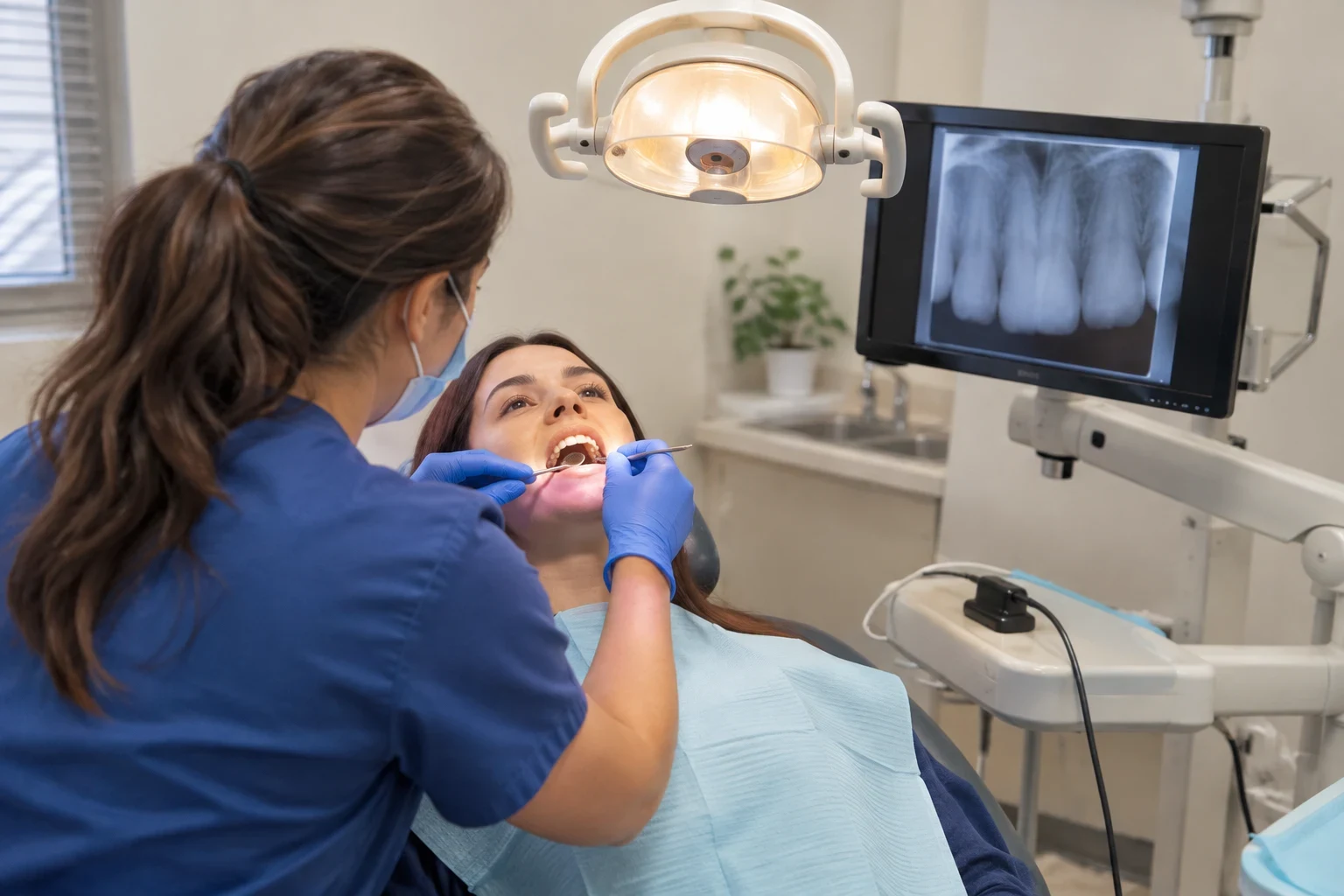
When a tooth starts aching, chips on something hard or loses its crown, guessing at the cause wastes time. Our dentists examine the tooth, take X-rays, ease the pain and give you the treatment plan with every fee written out before work begins.
Fast relief, with the cause found first
Urgent dental pain usually traces back to a handful of causes. Decay works its way into the pulp and inflames the nerve. A tooth splits under chewing pressure, often next to an old oversized filling. Bacteria spread past the root tip into the bone and form an abscess. Or a crown, filling or partial denture comes loose. Each calls for a different repair, so we start by confirming which one is behind your pain.
We take the X-rays your situation calls for, test the tooth with cold and gentle tapping, and turn to a CBCT scan when a crack or infection does not show on a flat film. Then we walk you through the findings, separate what is urgent from what can wait, and write down each option with its cost. Treatment starts only after you choose.
We see patients from Hebron as well as Carrollton, Lewisville, The Colony and other nearby towns when a tooth flares up between checkups.
What an urgent visit covers
Focused exam and imaging
We check the sore tooth and its neighbors, take periapical or bitewing X-rays, and add a CBCT scan when we need a 3D look at the root and the bone around it.
Relief that targets the cause
Anesthetic only quiets the tooth for a few hours. Real relief comes from treating the source: removing inflamed pulp, draining an abscess or covering an exposed nerve, so the ache stays gone after the numbness fades.
Temporary protection
A broken tooth can be covered with a temporary filling, and a crown that came off can often be cleaned and cemented back on if the tooth beneath it is healthy. That keeps you comfortable until the permanent repair.
A written treatment plan
Before any work past the evaluation, you receive the diagnosis, our recommendation and each fee on paper. When a root canal can keep the tooth, that option comes first. When it cannot, we explain the extraction and what replacing the tooth could involve, including dental implants.
Insurance and payment answers
We verify your PPO benefits and lay out the expected plan coverage beside your share of the cost.
Signs you should be seen soon
Pain that lingers after cold or heat
A quick twinge that is gone in a few seconds is usually sensitivity. An ache that hangs on for a minute or longer after something cold suggests an inflamed pulp that rarely recovers by itself.
Throbbing that wakes you at night
Lying flat raises the pressure inside the tooth. Pulsing pain that starts on its own usually means the nerve is dying or an infection is building.
Swelling in the gum or face
A small bump on the gum, a puffy cheek or a foul taste all point to an abscess. Swelling that moves up toward the eye or down the neck, or any difficulty breathing or swallowing, calls for a hospital visit without delay.
Pain when you bite and release
A sudden jolt the moment you open after biting is a typical sign of a cracked tooth. Cracks usually spread, so treating them early leaves more ways to keep the tooth.
A broken tooth or lost crown
Even if it does not hurt, exposed dentin or an uncovered crown edge lets bacteria in and leaves the tooth fragile under chewing pressure.
How your visit runs
- 1
Your phone call
Tell us what happened, where it hurts and what you have taken for it. We set an appointment and explain what to bring, such as your insurance card and medication list.
- 2
Diagnosis
Our board-certified dentist examines the tooth, reviews the imaging and tests it so the source of the pain is clear. You see the X-rays with us on the screen.
- 3
Written plan and your decision
We go over the options and hand you the plan with fees listed line by line. Nothing is added later without your say.
- 4
Treatment and next steps
With your approval, we relieve the pain and stabilize the tooth, often in the same visit. Any follow-up work, like a final crown, is scheduled with its cost already on paper.
What moves the price of urgent care
Until we know what is causing the problem, any price would be a guess, so the exam comes first. Once we have a diagnosis, you get every fee in writing before we start on the tooth. Many urgent visits end with pain relief and a temporary repair, and the larger decisions can wait until you have had time to think.
- What we diagnose
- Recementing a crown, placing a temporary filling, starting a root canal and removing a tooth are different procedures, and each one has its own fee.
- How much imaging it takes
- Standard X-rays answer most questions. A CBCT scan is added only when a suspected crack, a hidden canal or bone loss calls for a 3D view.
- Which tooth and how many roots
- Front teeth usually have one canal. Molars often have three or four, and roots that curve or narrow take more chair time to treat.
- Insurance, financing and membership
- We are in-network with 15+ major PPO dental insurance plans. If you would rather pay over time, financing is available at 0% interest on terms up to 24 months, and seeing whether you preapprove leaves your credit score untouched. For patients without coverage, our in-house membership plan is another way to manage the cost.
Questions about urgent dental care
Something not covered here? (972) 663-5467
What does the first visit cost?
Your first appointment is our $25 Focused Evaluation. It covers a comprehensive exam and digital X-rays, adds a CBCT scan if your tooth needs a 3D look, and ends with a consultation where we build your treatment plan together. Any work past the evaluation is written down with its fee before it begins, so you know the total ahead of time.
Can you save my tooth or will it need to come out?
A painful tooth can often be kept with a root canal and a crown, as long as enough sound structure remains and any crack stops short of the root. We go over the X-rays with you so the reasoning is easy to follow. When removal is the better choice, we explain your options for replacing the tooth, including dental implants and dentures.
What should I do if a tooth gets knocked out?
Hold it by the white chewing surface and keep your fingers off the root. Rinse away dirt gently, without scrubbing. If you can, slide it back into the socket, or keep it in a cup of milk. See a dentist as soon as possible, because the cells on the root surface die quickly once the tooth is out of the mouth.
Should I take antibiotics for a toothache?
Antibiotics can slow an infection that is spreading, but they cannot reach the inflamed or dead nerve tissue sealed inside the tooth. That is why the ache usually returns once the prescription runs out. Lasting relief comes from removing the source with a root canal or an extraction.
Do you take my insurance?
We are in-network with more than 15 major PPO plans. Bring your insurance card to the visit, and we will check your benefits and show the expected coverage next to your share on the written plan.
Find out what is causing the pain
Tell us on the phone what happened and we will set a time to examine the tooth. You leave more comfortable, with the diagnosis and your next steps on paper.